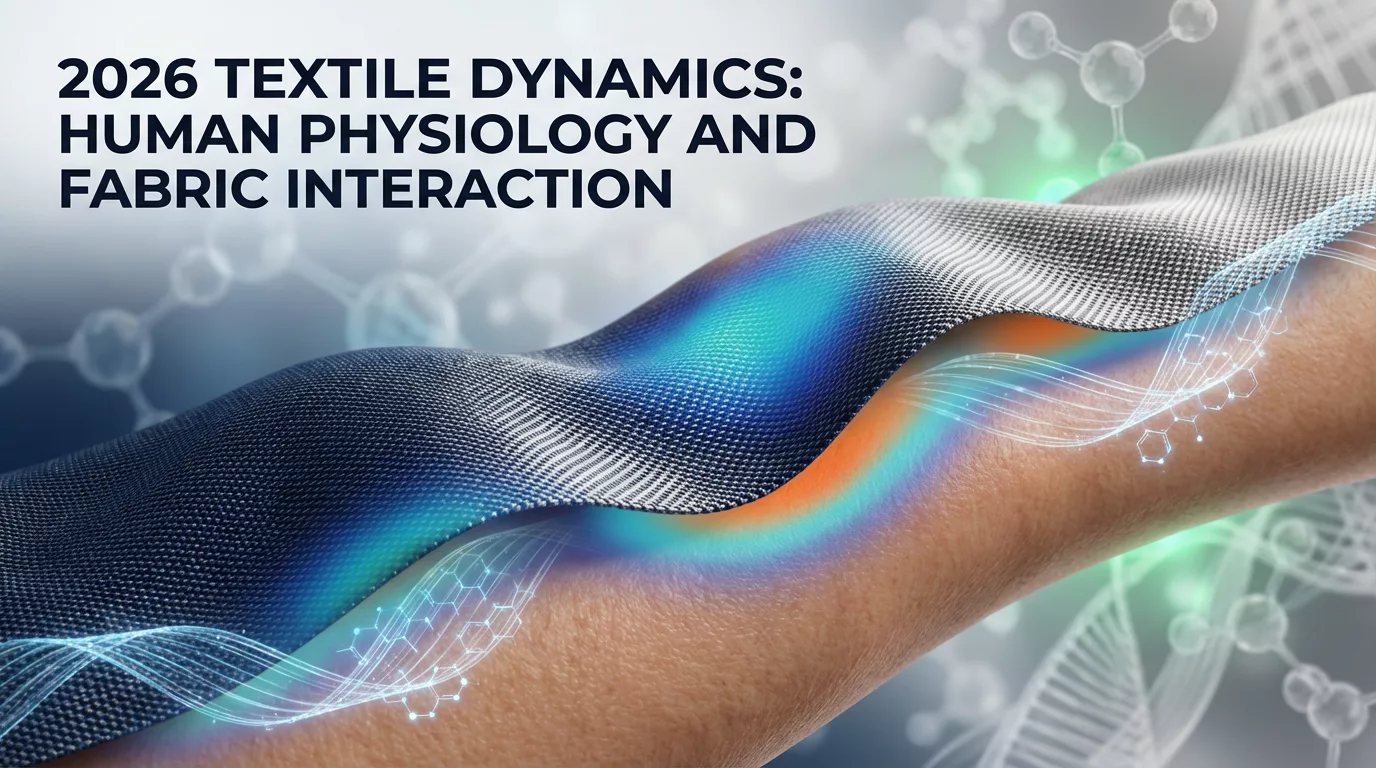
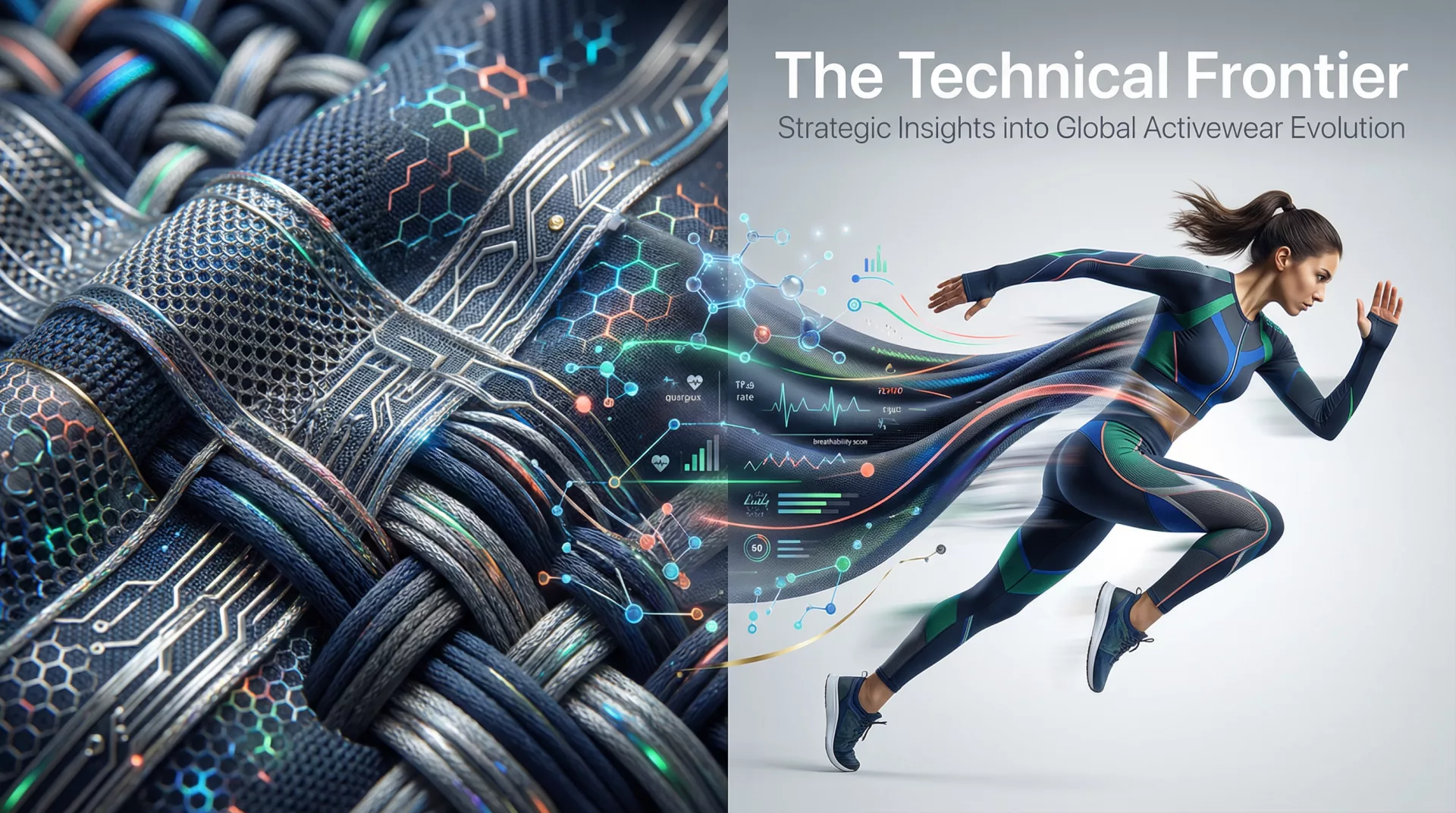
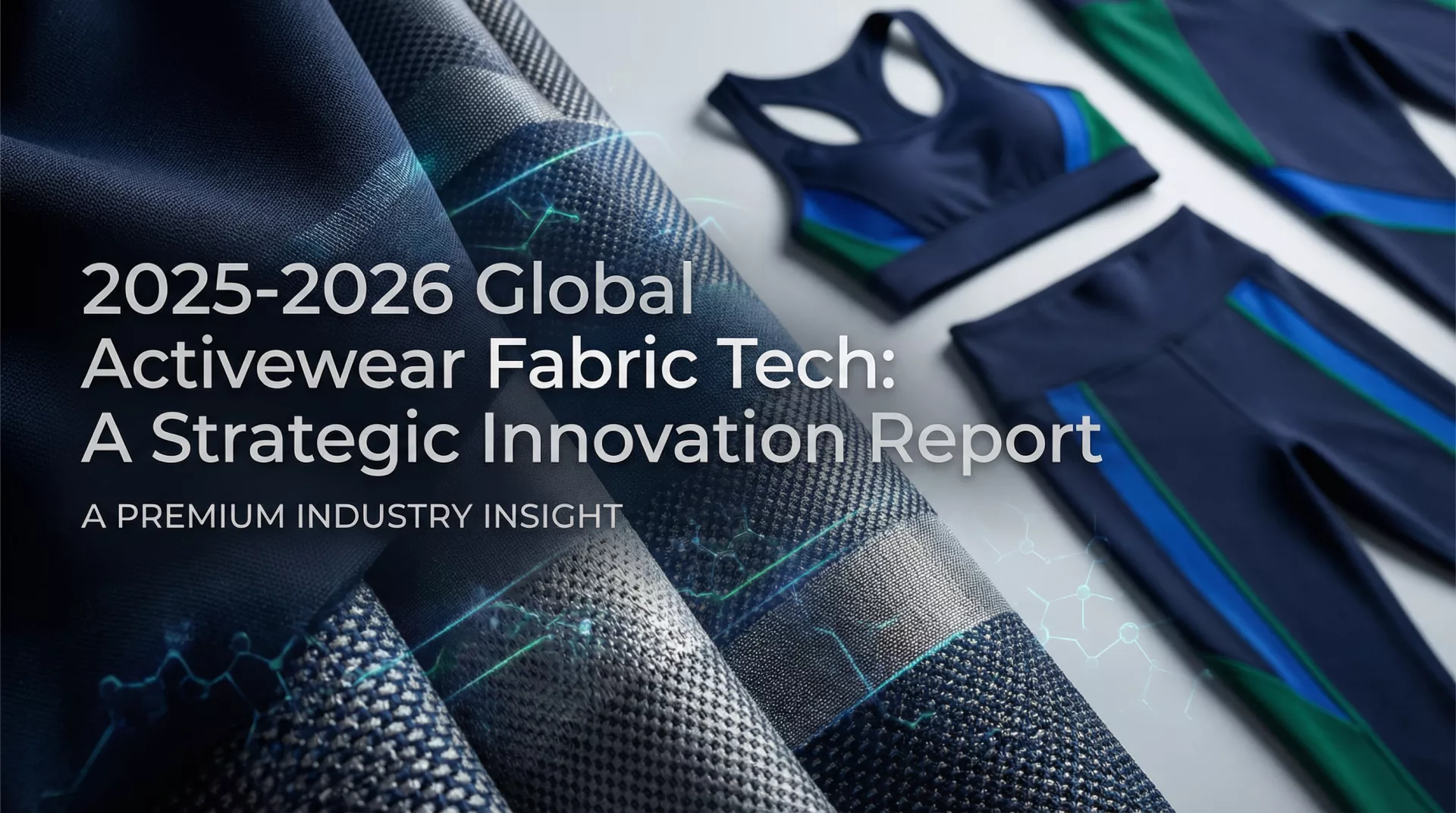
2025-2026 Global Activewear Fabric Tech: A Strategic Innovation Report
The Macro Paradigm Shift: From Feature Stacking to Experience-Driven Ecosystems
As we move into the 2025-2026 cycle, the global activewear industry is undergoing a profound transformation. For decades, the industry logic was dominated by 'Feature Stacking'—the practice of layering technical specifications like higher waterproof ratings or stronger compression ratios to attract buyers. However, as the boundaries between performance gear and daily life vanish, this traditional R&D approach is becoming obsolete.
The emerging core of the market is the 'Long-Wear Assumption.' Modern consumers demand that a single garment transitions seamlessly from a morning yoga session to the office and into evening social settings. This requires fabrics that maintain thermal-moisture balance and odor control during hours of low-intensity activity following a high-intensity workout. For B2B retailers, this means sourcing products like the 2025 Sexy Nude Backless Sports Bra Seamless Yoga Vest, which prioritizes a 'second-skin' feel and aesthetic versatility alongside technical performance.
Regulatory-Driven Sustainability and the Circular Economy
By 2025, sustainability has moved from a marketing differentiator to a baseline requirement. With the implementation of the EU’s Ecodesign for Sustainable Products Regulation (ESPR), the supply chain is being forced into a transparent reconstruction. The focus has shifted from 'new materials' to 'new systems.'
We are seeing a move beyond simple recycled polyester (rPET) toward textile-to-textile chemical recycling. Companies like Syre and Circ are leading the charge by depolymerizing waste textiles into virgin-quality fibers. This '原生品质' (virgin-quality) allows high-performance activewear to be recycled indefinitely without losing integrity. Furthermore, the mandatory Digital Product Passport (DPP) will soon track every garment's chemical composition and recyclability, providing the data foundation for a truly closed-loop industry.
The Raw Material Revolution: Bio-Based and Carbon Capture
To achieve 'defossilization,' the industry is looking toward non-petroleum sources. Key innovations for 2026 include:
- Next-Gen Bio-Based Spandex: Products like Lycra EcoMade use industrial corn-based ingredients to replace 70% of petroleum content without compromising stretch or recovery.
- Carbon Capture Fabrics: Technology from firms like LanzaTech converts industrial CO2 emissions into polyester. High-end brands are already utilizing these 'pollution-made' fibers to create premium, high-narrative performance wear.
- Agricultural Waste Utilization: Seaweed, banana, and pineapple leaf fibers are being refined into soft, moisture-wicking knits that cater to the 'wearable skincare' trend, offering anti-inflammatory and hydrating properties.
Smart Textiles: From Passive Monitoring to Active Intervention
In 2026, smart textiles have moved past the 'gimmick' stage. Sensors are now soft, washable, and invisibly integrated into the yarn. Systems like Myant’s Skiin monitor ECG, body temperature, and stress levels continuously. More importantly, we are seeing the rise of Haptic Feedback—garments that provide vibrating cues to correct yoga posture or enhance proprioception during training.
For high-intensity athletes, hardware-integrated apparel is essential. For example, Men's PRO Compression Running Tights provide the structural baseline needed for advanced muscle support, which is increasingly being paired with electronic monitoring to optimize recovery and prevent overtraining syndrome.
Dynamic Thermal Management and Adaptive Tech
With climate change causing extreme weather fluctuations, activewear must now provide 'Dynamic Equilibrium.' Technologies like HeiQ Smart Temp use hydro-functional polymers that activate cooling when you sweat and trap heat when you cool down. Similarly, Gore-Tex ePE membranes are replacing PFAS-heavy materials, offering environmentally friendly waterproofing that is thinner and more breathable.
One of the most futuristic developments is 3D Self-Folding Fabric. These materials physically react to moisture; when the wearer sweats, the fibers expand to increase porosity and airflow, then return to a textured, heat-trapping state once dry. This 'zero-energy' smart tech represents the pinnacle of modern fabric engineering.
Manufacturing and Aesthetic Trends for 2026
The manufacturing landscape is shifting toward WHOLEGARMENT 3D knitting and seamless technology. These processes eliminate 'cut-and-sew' waste and allow for complex 'body mapping'—placing breathability and support exactly where needed without seams. This efficiency supports the trend of Nearshoring, as brands move production closer to major markets in Europe and North America to reduce carbon footprints and lead times.
Aesthetically, we are seeing a return to Sensory Textures. Jacquards, 3D ribs, and even functional embroidery are replacing flat synthetics. The 2026 color palette, led by 'Luminous Blue' and 'Peaceful Lilac,' reflects a balance between high-tech futurism and healing wellness. For wholesale buyers, the competitive edge will lie in integrating these three dimensions: ethical depth in materials, digital precision in manufacturing, and sensory warmth in design.
SMBSports Team
Expert insights from the SMBSports team, bringing you the latest in activewear manufacturing, industry trends, and practical guides for fitness apparel brands.