Beyond the Mat: The End-to-End Journey of Yoga Wear Production
Phase 1: Planning and Preparation (The Blueprint)
The process begins long before the cutting of any fabric, focusing heavily on R&D and design perfection.
1. Market Research & Concept Development
- Trend Forecasting: Identifying emerging styles, colors (e.g., sustainable dyes, seasonal palettes), and consumer demands (e.g., enhanced compression, lighter-weight fabrics).
- Functional Specification: Defining technical properties needed: 15-30% Spandex ratio, Four-Way Stretch, specific levels of opacity (squat-proof), and moisture-wicking capability.
2. Design and Pattern Making
- Ergonomics and Fit: Designers create technical sketches, considering seams placement (to minimize chafing) and anatomical support (e.g., V-shaped waistbands).
- Master Pattern Creation: Using CAD (Computer-Aided Design) software, the master pattern is digitized and graded for all required sizes.
- Sampling & Fitting: Proto Samples are made and rigorously tested on fit models through various poses to confirm comfort, recovery, and aesthetic appeal.
Phase 2: Sourcing and Textile Engineering (The Raw Material)
The quality of a yoga garment is primarily determined by its fabric. This phase is crucial for performance and durability.
1. Fabric Sourcing and Verification
- Yarn Selection: Choosing high-performance synthetic fibers, typically Nylon/Polyester blended with Spandex (Lycra). Nylon offers softness and strength, while Polyester provides excellent moisture management.
- Functional Treatments: The raw fabric is treated with specialized finishes:
- Anti-Microbial/Anti-Odor: Essential for high-sweat environments.
- UPF Protection: For outdoor activities.
- Wicking Finish: To draw moisture away from the skin.
- Fabric Quality Control (QC): Testing for pilling resistance, tensile strength, color fastness (to ensure colors don't bleed or fade), and shrinkage rate.
2. Trims and Hardware
All accompanying components are sourced, including high-elastic threads (crucial for flatlock stitching), non-irritating woven labels, zippers, and drawstrings.
Phase 3: Cutting and Decoration (The Shaping)
Precision is paramount, especially when working with highly elastic textiles.
1. Automated Cutting
- Nesting and Layout: The digitized patterns are arranged on the fabric lay using advanced software to ensure maximum fabric utilization and minimal waste (Marker Efficiency).
- High-Speed Cutting: Multi-ply fabrics are cut using automated, computer-controlled cutters. This minimizes human error and ensures that every piece is cut to the exact specification, a must for achieving perfect seam alignment later.
2. Printing and Embellishment
- Sublimation Printing: For vivid, all-over prints, Sublimation is often used. The design is printed onto transfer paper and then heat-pressed into the fabric, turning the ink into a gas that bonds permanently with the synthetic fibers. This ensures the print remains breathable and won't crack.
- Screen Printing/Heat Transfer: Used for logos and small graphic placements.
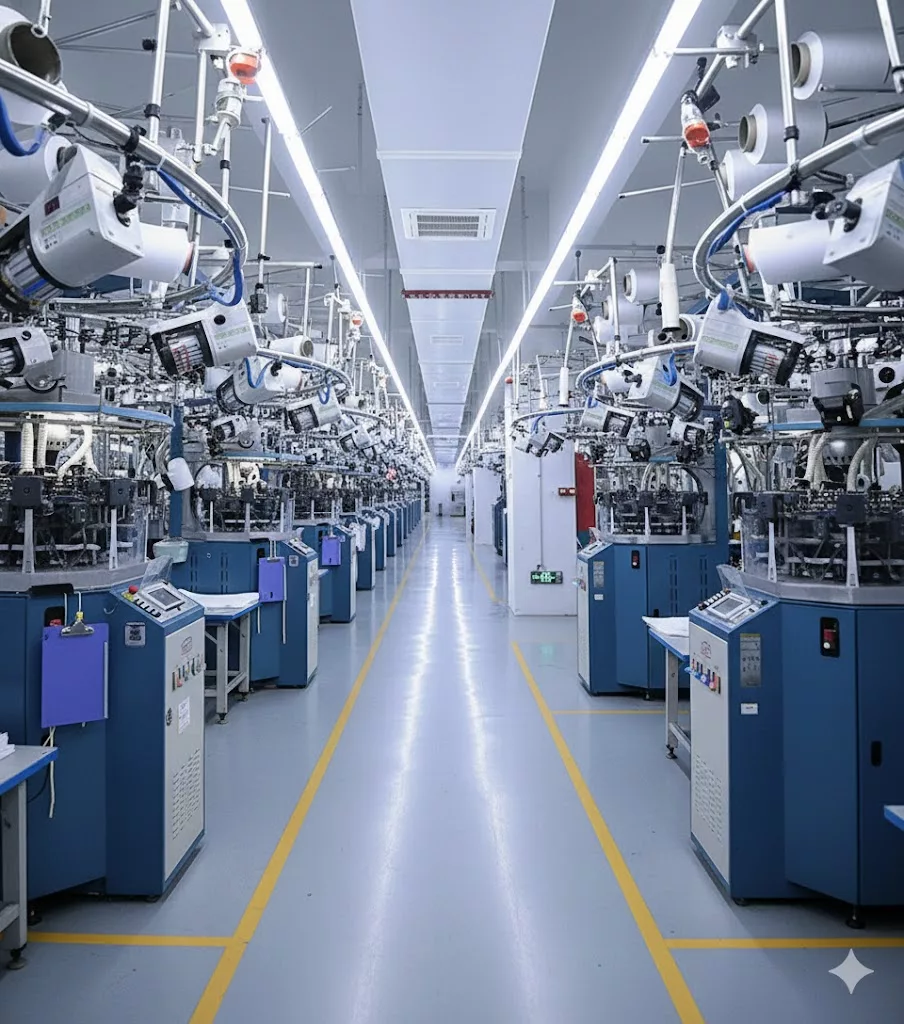
Phase 4: Sewing and Assembly (The Core Craftsmanship)
This is where the flat pieces of fabric are transformed into a three-dimensional garment, relying on specialized machinery and techniques.
1. Specialized Seaming Technologies
- Flatlock Stitching (Four-Needle, Six-Thread): The gold standard for yoga and athletic wear. This technique creates a strong, flat, overlapping seam that lies flush against the fabric, completely eliminating friction and chafing—the core requirement for comfort during movement.
- Overlocking (Serging): Used to secure fabric edges and prevent fraying.
- Coverstitching: Used for hemming and finishing edges (e.g., ankle cuffs and necklines) to provide stretch and a clean look.
2. Assembly Line Flow
- Modular Production: Garments are often produced in sections (e.g., waistbands, legs, gussets) by specialized operators before being combined in the final assembly stations.
- Gusset Insertion: A small, triangular or diamond-shaped piece of fabric is sewn into the crotch area to increase flexibility and reinforcement, minimizing stress on the main seams.
3. In-Line Quality Checks
Operators perform checks after critical steps (e.g., waistband attachment, gusset assembly) to ensure seam stretch, tension, and alignment are perfect before proceeding.
Phase 5: Finishing and Packaging (The Final Product)
The final stages ensure the garment meets consumer expectations for cleanliness and presentation.
1. Garment Finishing
- Thread Trimming: All excess threads are carefully cut and removed.
- Labeling: Care labels, size tags, and security tags are sewn in or heat-sealed.
- Pressing/Steaming: The finished garment is professionally pressed using steam equipment to remove wrinkles and finalize the shape/fit.
2. Final AQL Inspection
- AQL (Acceptable Quality Limit) Check: A rigorous final inspection takes place. QC teams check a statistically significant sample of the finished batch for defects in stitching, measurements, color, and overall appearance.
3. Packaging and Shipment
- Folding and Packing: Garments are carefully folded and placed into retail packaging (e.g., polybags, recycled packaging, or boxes).
- Carton Sealing: Products are organized into cartons, labeled with shipping marks, and prepared for dispatch to distribution centers or retail partners globally.
Conclusion: Performance Woven In
From the initial blend of Nylon and Spandex to the final flatlock stitch, the production of professional yoga wear is a testament to technical textile manufacturing. Every step is designed to ensure the resulting garment is not just clothing, but a high-performance tool that enhances the wearer's practice.
SMBSports Team
Expert insights from the SMBSports team, bringing you the latest in activewear manufacturing, industry trends, and practical guides for fitness apparel brands.